MIG, TIG, and structural stick welding for residential, commercial, and industrial projects. All welding performed in-house at our Sandy, Utah shop by certified welders.
⸻ Fabrication Services
AWS-Certified
Welding
⸻ AWS Certified Welding Services Utah
Welding is the core
of everything we build.
Welding is not a step in the process at Lucas Services. It is the process. Every staircase, railing, gate, structural frame, and custom commission that leaves our shop has been welded by our own crew. We do not subcontract welding. The quality of the weld is the quality of the piece, and we are accountable for both.
Our welders hold AWS certifications and work to AWS D1.1 Structural Welding Code standards for structural applications. We perform MIG welding (GMAW) for production fabrication, TIG welding (GTAW) for precision work and stainless steel, and stick welding (SMAW) for structural and field applications. Process selection is based on the material, joint configuration, and finish requirements of each project.
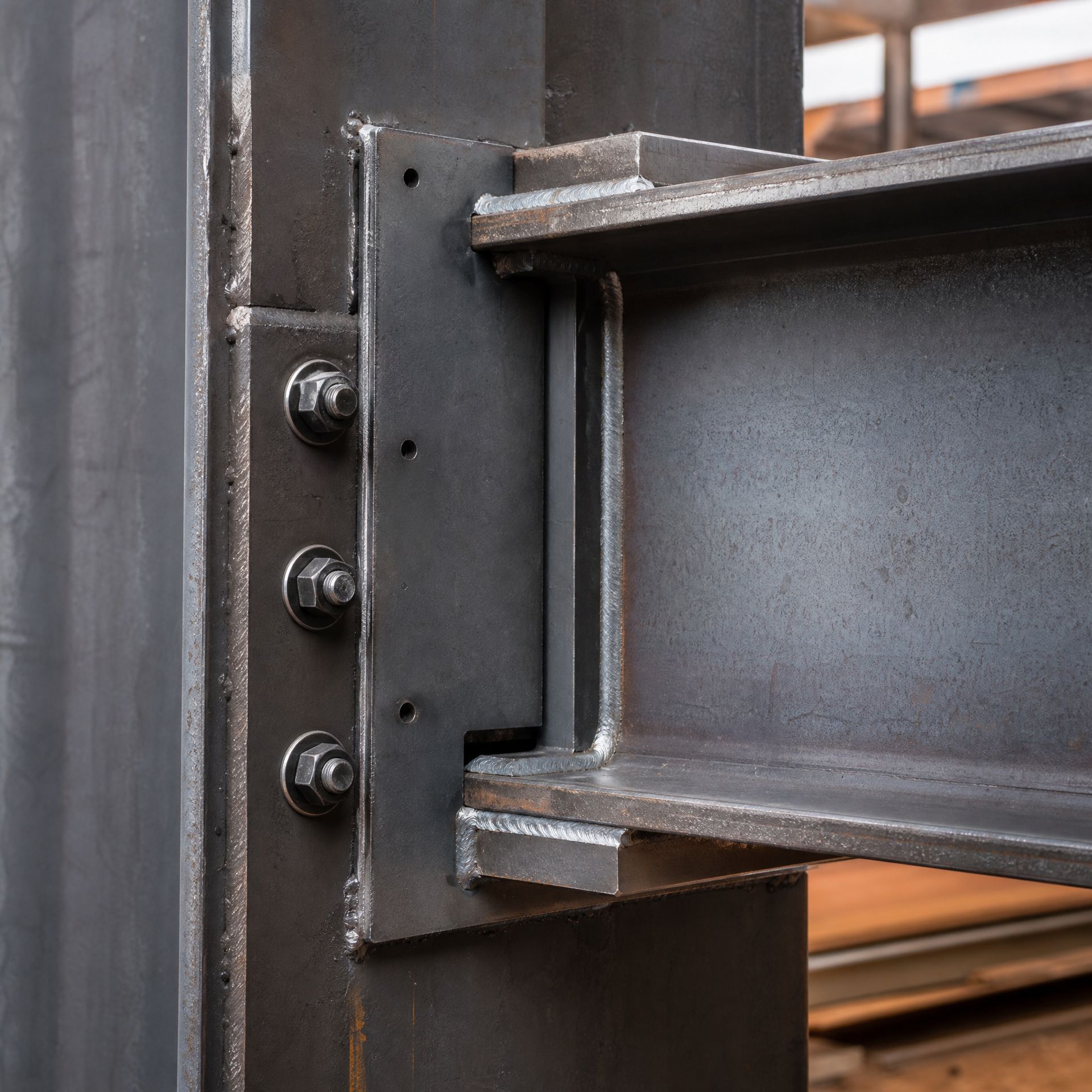
We weld carbon steel, stainless steel, and aluminum. For structural applications, we document weld procedures and certifications and make that documentation available on request. For architectural applications, we grind and finish welds to the level of visibility the design requires. A weld on a structural beam and a weld on a visible staircase stringer are held to different appearance standards, and we know the difference.
Welding Processes and Capabilities
MIG Welding (GMAW): structural and production fabrication
TIG Welding (GTAW): precision, stainless steel, aluminum
Stick Welding (SMAW): structural and field applications
Carbon steel, stainless steel (304/316), and aluminum (6061/6063)
AWS D1.1 Structural Welding Code compliance
AWS D1.2 Aluminum Structural Welding Code compliance
Weld procedure specifications (WPS) available on request
Welder performance qualifications (WPQ) available on request
Field welding with portable equipment
NDT coordination: UT, MT, PT through third-party inspectors
⸻ Welding Standards and Process Selection
The right process
for every application.
MIG Welding (GMAW): Production and Structural
MIG welding is our primary process for structural and production fabrication. It is fast, consistent, and well-suited for carbon steel. We use MIG welding for most railing, staircase, gate, and structural fabrication work where weld speed and consistency are priorities.
TIG Welding (GTAW): Precision and Appearance
TIG welding is used for precision work, stainless steel, aluminum, and applications where weld appearance is critical. It produces a cleaner, more controllable weld bead with less spatter and a more refined appearance. TIG is the standard process for visible architectural metalwork and stainless steel applications.
Stick Welding (SMAW): Structural and Field
Stick welding is used for structural applications and field welding where portability and penetration are priorities. It is suitable for heavier plate and structural members, and it is the most practical process for on-site work where shielding gas is not practical.
AWS D1.1 Documentation
All structural welding is performed to AWS D1.1 standards. We maintain weld procedure specifications (WPS), procedure qualification records (PQR), and welder performance qualifications (WPQ). These documents are available on request for projects requiring them, including commercial and industrial projects with third-party inspection.
Weld Finish and Appearance
Weld appearance requirements vary by application. Structural welds are held to AWS D1.1 visual inspection criteria. Architectural welds on visible surfaces are ground, blended, and finished to match the surrounding material. We discuss appearance requirements with every client before fabrication begins.
⸻ Capabilities and Standards
Welding Certifications and Technical Standards
Lucas Services maintains AWS certifications and weld documentation consistent with the requirements of residential, commercial, and industrial construction projects in Utah.
AWS Certification
AWS D1.1 Structural Steel, AWS D1.2 Aluminum
Welding Processes
GMAW (MIG), GTAW (TIG), SMAW (Stick)
Base Metals
Carbon steel (A36, A572), stainless steel (304, 316), aluminum (6061, 6063)
Filler Materials
ER70S-6 (carbon steel MIG), ER308/316 (stainless TIG), ER4043/5356 (aluminum TIG)
Documentation
WPS, PQR, WPQ available on request for structural projects
Inspection Coordination
Third-party UT, MT, and PT inspection coordination available
Field Welding
Portable GMAW and SMAW equipment for on-site structural welding and modifications
Weld Finish
Structural visual inspection per AWS D1.1; architectural welds ground and finished per project specification
⸻ WHO WE WORK WITH
Who We Weld For
Our welding services support a wide range of clients, from homeowners with a single custom piece to general contractors with ongoing structural requirements.
General Contractors & Structural Engineers
We provide AWS-certified structural welding with full documentation, including WPS, PQR, and WPQ. We coordinate with engineers of record on weld requirements and can support third-party inspection for commercial and industrial projects.
Architects & Interior Designers
We provide precision TIG welding for architectural metalwork where weld appearance is critical. We discuss finish requirements before fabrication and hold architectural welds to the appearance standards your design requires.
Homeowners & Custom Clients
For residential and custom projects, we provide welding as part of the complete fabrication and installation service. You do not need to source a separate welder. The same crew that welds your piece in the shop installs it on site.
⸻ COMMON QUESTIONS
Questions Worth Asking Before You Hire a Welder
What is the practical difference between MIG, TIG, and stick welding for my project?
MIG welding is fast and cost-effective for structural and production work on carbon steel. TIG welding is slower and more expensive but produces a cleaner, more precise bead. It is the right choice for stainless steel, aluminum, and any metalwork where the weld will be visible in the finished piece. Stick welding is used for field welding and structural connections where portability matters more than bead appearance. We select the process based on your material, application, and appearance requirements, not convenience.
Are your welders AWS certified, and what does that mean?
Yes. Our welders hold AWS certifications, which means they have passed a standardized performance qualification test for specific welding processes, positions, and materials. AWS D1.1 governs structural steel welding. AWS D1.2 governs aluminum. Certification means the welder has demonstrated they can produce a sound weld under controlled test conditions. We maintain weld procedure specifications (WPS) and welder performance qualifications (WPQ), which are available on request for projects requiring documentation.
What weld documentation can you provide for a commercial or industrial project?
For projects requiring weld documentation, we provide weld procedure specifications (WPS), procedure qualification records (PQR), and welder performance qualifications (WPQ). We can coordinate with a third-party certified welding inspector (CWI) for projects requiring independent inspection. We provide mill test reports (MTRs) for structural projects. All documentation is available as part of project closeout.
How do you handle weld quality on architectural metalwork where the weld will be visible?
For visible architectural welds, we grind, blend, and finish the weld to match the surrounding material. The level of finish is specified before fabrication begins. A full flush grind is the most labor-intensive option and produces a seamless appearance. A dressed weld leaves the weld profile but removes spatter and sharp edges. We discuss appearance expectations with every client before fabrication begins so there are no surprises at installation.
Can you weld stainless steel and aluminum, and why does it cost more?
Yes. We weld stainless steel (304 and 316) using TIG welding with matching stainless filler. We weld aluminum (6061 and 6063) using TIG welding with ER4043 or ER5356 filler. Both materials cost more to weld than carbon steel because they require TIG process, specialized filler materials, more careful joint preparation, and slower travel speeds. Stainless also requires back-purging on some joints to prevent oxidation on the back side of the weld.
Can you perform field welding on site, and what are the limitations?
Yes. We have portable MIG and stick welding equipment and can perform field welding, on-site modifications, and structural connections at the job site. Field welding is practical for carbon steel and structural connections. TIG welding in the field is possible but limited by wind and contamination. We assess the site conditions before committing to field TIG work. Field welding is available throughout the Wasatch Front and surrounding areas.
What is the difference between a structural weld and a tack weld?
A structural weld is a full-penetration or fillet weld designed to carry load and meet a specific weld size and length requirement per the engineering drawings. A tack weld is a small, temporary weld used to hold components in position during assembly before final welding. Tack welds are not structural and are typically consumed by the final weld pass. On structural projects, tack welds must be placed by qualified welders and must meet the same quality requirements as the final weld.
Tell us what needs
to be welded.
Whether you need structural welding documentation or precision TIG work on architectural metalwork, we have the process and the certification to handle it. Serving clients across the Wasatch Front.